
Here’s what you’ll learn when you read this article:
- How to separate hormone-related symptoms from common drivers like obesity and sleep apnea, without jumping to conclusions.
- How guideline-based testing works, including why two early-morning testosterone tests matter before any diagnosis or treatment.
- What responsible testosterone care involves today, including FDA-highlighted blood pressure monitoring and evidence from the TRAVERSE trial.
Table of Contents
When “burnout” might be more than stress
Men across the U.S. often describe the same shift: steady energy turns into afternoon crashes, workouts feel harder to recover from, libido fades, and motivation slips. Many assume stress or aging explains everything. Hormone health sometimes plays a role, yet the answer rarely sits in a single lab number.
National health trends add context. U.S. Census Bureau QuickFacts for the United States shows a large share of residents are 65 and older, which increases the number of men who face age-related health changes. Public health reporting also documents that adult obesity remains common nationwide, a factor strongly associated with lower testosterone levels in men; the National Center for Health Statistics summarizes recent U.S. estimates in CDC Data Brief 508 on adult obesity prevalence. Those realities shape how fatigue, belly fat, and recovery problems show up in everyday life.
Men in high-stress professions, former athletes, and busy fathers often search for solutions based on symptoms rather than diagnoses. They type in “low energy,” “brain fog,” “low libido,” or “poor recovery,” not “hypogonadism.” A responsible approach respects that lived experience while grounding decisions in established medical guidance.
What “hormone optimization” should actually mean
Hormone optimization does not mean chasing a high testosterone number. The Endocrine Society states that clinicians should diagnose testosterone deficiency only in men who have compatible symptoms and consistently low testosterone confirmed on repeat morning testing, using fasting morning samples and a confirmatory repeat measurement to reduce day-to-day variability (Endocrine Society Clinical Practice Guideline). That framework protects patients from overdiagnosis and unnecessary treatment.
The American Urological Association guideline identifies total testosterone below 300 ng/dL as a reasonable diagnostic cut-off in the appropriate clinical context, and it emphasizes early-morning testing on two different days (AUA Testosterone Deficiency Guideline (PDF)). This standard exists because testosterone levels fluctuate throughout the day and respond to sleep, illness, and stress. One random afternoon lab draw cannot establish a diagnosis.
A helpful definition of optimization centers on alignment. Symptoms, laboratory results, overall health status, and personal goals must point in the same direction. When they do not align, men deserve a deeper evaluation rather than a reflex prescription.
Why testosterone matters for performance and health
Testosterone influences several systems that active men care about. It plays a role in sexual function, supports lean mass maintenance, contributes to bone health, and stimulates red blood cell production. Randomized trial evidence in older men with low testosterone found that testosterone treatment increased hemoglobin and corrected anemia in many participants (Testosterone Trials: Anemia), which shows how broadly this hormone interacts with physiology.
Men often focus on libido and erectile quality, yet energy and recovery receive equal attention in real life. Testosterone interacts with muscle protein turnover and overall body composition, so changes in training response or increasing central fat can accompany low levels. Those patterns overlap with obesity and metabolic health, which makes careful assessment essential.
An honest conversation also includes limits. Testosterone does not override poor sleep, chronic stress, alcohol excess, or untreated depression. Overattributing every symptom to hormones leads men away from other correctable drivers.
The checklist before assuming low T
Across the U.S., excess body weight remains common, and it can blur the line between “low T symptoms” and metabolic strain. Research syntheses report that weight loss in men with obesity associates with increases in testosterone levels, sometimes meaningfully (Meta-analysis on weight loss and testosterone). That relationship matters because a lifestyle-first plan can shift both symptoms and lab values without committing a man to long-term medication.
Sleep deserves equal attention. Obstructive sleep apnea has been associated with low testosterone levels in severely obese men. Untreated apnea also drives daytime fatigue, poor concentration, and low libido. A man who snores heavily, wakes unrefreshed, and struggles with midday crashes should consider sleep evaluation before assuming a hormonal cause.
Medication review and alcohol patterns also shape the picture. Certain medications can affect sexual function or energy, and weekend drinking habits can blunt sleep quality even when total hours in bed appear adequate. A structured assessment looks at these contributors first, then layers in laboratory testing.
Getting tested the right way
Guidelines require two separate early-morning testosterone measurements before diagnosing deficiency (Endocrine Society guideline). That rule exists because levels peak in the morning and vary day to day. Men who test only once, or at inconsistent times, risk false reassurance or unnecessary alarm.
Total testosterone anchors the evaluation, yet clinicians often interpret results alongside other markers depending on the situation. Luteinizing hormone and follicle-stimulating hormone can help distinguish primary from secondary patterns. Baseline hemoglobin and hematocrit establish safety markers before any therapy discussion begins.
Blood pressure and metabolic markers deserve a place in the baseline assessment as well. The FDA class-wide labeling changes for testosterone products in 2025 highlight increased blood pressure observed in ambulatory monitoring studies and incorporate results from TRAVERSE. These updates reinforce that hormone care belongs within a broader cardiovascular risk framework.
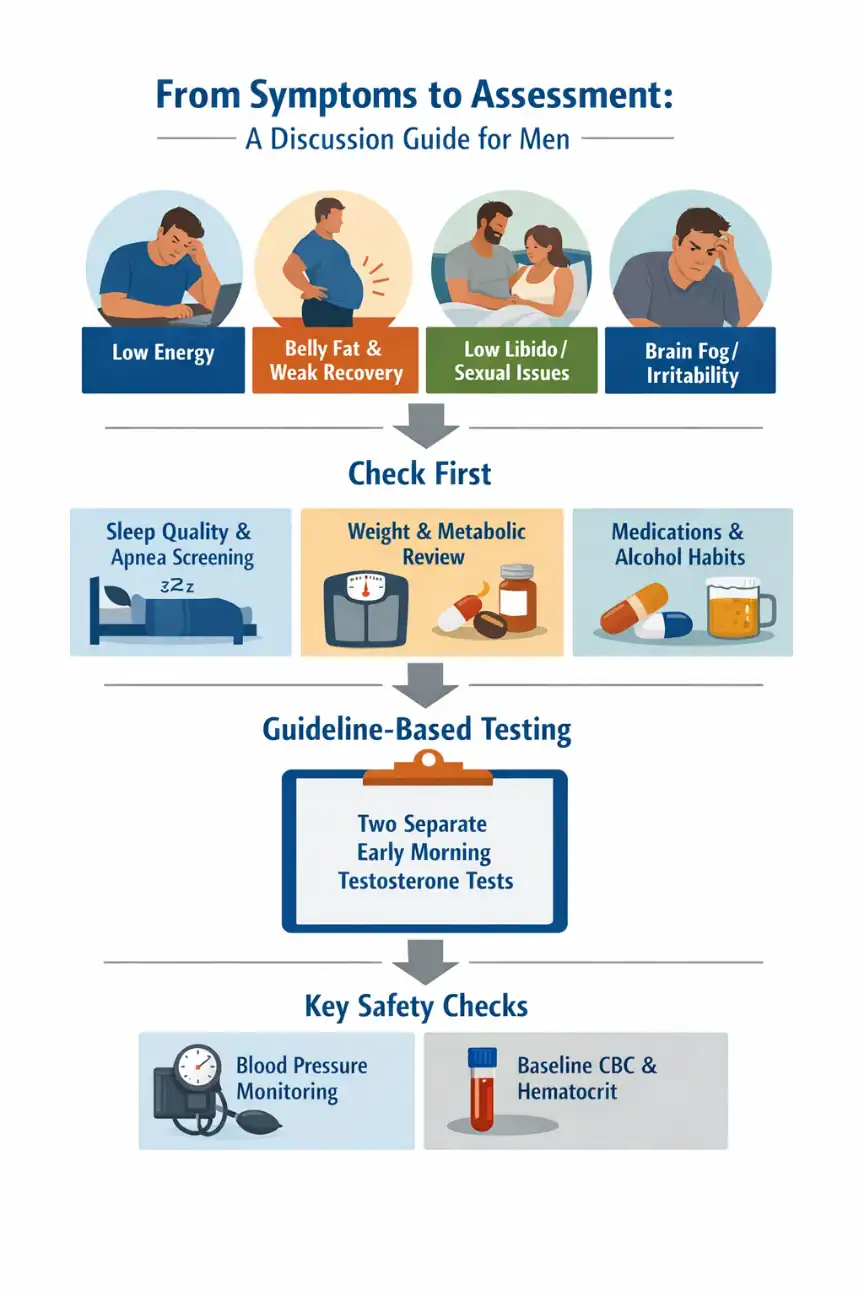
The table below summarizes common symptom clusters men report and the first evidence-based checks that keep decisions aligned with major guidelines and safety updates.
| What men notice (symptom cluster) | High-yield first checks to discuss | Testing / monitoring anchor supported by current guidance | Why it matters (source-grounded) |
|---|---|---|---|
| Low energy and afternoon crashes | Sleep quality review; obesity/weight trend review | If hormone evaluation fits, confirm with two separate early-morning testosterone measurements | Guidelines require symptoms plus consistently low testosterone confirmed on repeat morning testing; obesity and sleep disorders can correlate with lower testosterone and similar symptoms |
| Belly fat increase plus weaker recovery from training | Body weight and waist trend; metabolic risk discussion | Consider lifestyle-first pathway; if testing, repeat early-morning testosterone on two different days | Reviews report that weight loss in men with obesity can increase testosterone levels; repeat testing avoids decisions based on transient lows |
| Low libido or reduced sexual function | Sleep apnea screening discussion when symptoms fit; broader health review | Confirm testosterone status with two separate early-morning tests before labeling “low T” | Guidelines frame diagnosis as symptoms plus consistent low values; sleep-disordered breathing has been associated with lower testosterone in severely obese men |
| Brain fog, irritability, “not myself” | Sleep and weight context review; avoid single-cause assumptions | Use guideline-based repeat morning testing if symptoms and context warrant hormone assessment | Guidelines require compatible symptoms plus repeated low testosterone before diagnosis, which reduces misattribution when overlapping causes exist |
| Considering therapy but worried about heart risk | Cardiovascular risk discussion; understand what evidence applies to monitored care | Reference TRAVERSE results in context of confirmed hypogonadism and monitoring | TRAVERSE reported noninferiority to placebo for major adverse cardiac events in men with hypogonadism and high cardiovascular risk under trial monitoring |
| On therapy or thinking about it: blood pressure concerns | Baseline and follow-up blood pressure tracking | Monitor blood pressure as part of ongoing safety oversight | FDA class-wide labeling changes highlight increased blood pressure seen in ambulatory blood pressure monitoring studies for testosterone products |
| On therapy or thinking about it: “thick blood” / hematocrit questions | Baseline CBC and planned follow-up checks | Track hematocrit/hemoglobin as part of routine monitoring | Medical literature describes erythrocytosis as a recognized TRT-related risk, supporting baseline and follow-up blood counts |
| Future kids still on the table | Clarify fertility goals before starting any exogenous testosterone | Discuss fertility-preserving strategies with a clinician when appropriate | Reviews describe that exogenous testosterone can suppress spermatogenesis, making fertility intent a primary decision factor |
Treatment decisions grounded in evidence
The TRAVERSE trial, published in the New England Journal of Medicine in 2023, evaluated cardiovascular safety of testosterone-replacement therapy in men with confirmed hypogonadism and existing or high cardiovascular risk. Investigators found testosterone therapy noninferior to placebo for major adverse cardiac events under monitored conditions (TRAVERSE trial (NEJM)). That finding informs the current safety conversation but does not eliminate the need for careful patient selection.
The FDA’s 2025 labeling update maintained limitations regarding age-related hypogonadism language and emphasized blood pressure monitoring (FDA testosterone labeling changes). These regulatory actions underscore that testosterone therapy requires ongoing oversight, not casual use. Men considering treatment should understand both potential benefits and structured monitoring requirements.
Erythrocytosis represents another well-documented concern. Testosterone therapy can raise hematocrit, which makes baseline and follow-up blood counts essential. A responsible program builds monitoring into its design rather than treating it as an afterthought.
Thinking About TRT? Start With a Structured Plan
If symptoms and repeat labs point in the same direction, explore Testosterone Therapy (TRT) through a provider-led approach built around monitoring and long-term safety.
Fertility and long-term planning
Exogenous testosterone can suppress the hypothalamic–pituitary–gonadal axis and reduce spermatogenesis. Younger men or fathers who may want additional children need to discuss fertility goals before starting therapy. Alternatives or adjunctive strategies sometimes enter the conversation under specialist supervision, yet no man should begin testosterone without understanding potential reproductive implications.
Family-stage considerations often overlap with identity and performance goals. A father in his late 30s who feels drained after work and distant in his marriage may focus on libido and energy. He also may want another child, which changes the treatment calculus significantly.
A structured consultation addresses both short-term symptom relief and long-term reproductive plans. Men who align these goals early avoid regret later.
Want Hormone Support Without Ignoring Fertility Goals?
If energy, drive, and recovery issues overlap with future family planning, review Enclomiphene as part of a fertility-aware hormone health evaluation.
Measuring progress without chasing numbers
Optimization should translate into real-world improvements. Men typically want steadier energy through the workday, more consistent gym recovery, improved libido, and a reduction in central fat. Objective markers such as blood pressure trends, hematocrit, and metabolic labs provide safety guardrails alongside symptom tracking.
A former athlete who trains four days a week may notice that soreness lingers longer than it used to and motivation drops. A business owner may describe irritability and brain fog during afternoon meetings. A first responder managing shift work may struggle with fragmented sleep and low drive on days off. These scenarios illustrate how symptoms cluster differently across lifestyles.
Clinicians should define success before starting any intervention. Clear benchmarks prevent men from escalating doses in pursuit of abstract performance ideals. One natural example of a clinic committed to staying current on evolving guidance is Thunder TRT, where staff monitor updates from major guidelines and regulatory agencies related to testosterone care while serving eligible patients across the U.S.
How a structured evaluation typically unfolds
An evidence-based process starts with a detailed symptom inventory and lifestyle review. Sleep patterns, stress load, training frequency, alcohol intake, and medication use all enter the conversation. Early-morning laboratory testing follows guideline recommendations, and repeat testing confirms results before diagnosis.
Men who meet criteria for testosterone deficiency then discuss risks, benefits, and monitoring plans in plain language. Those who do not meet criteria receive targeted guidance on weight management, sleep optimization, and cardiovascular risk reduction. Either pathway keeps patient welfare at the center rather than forcing a predetermined outcome.
Questions? We are here to help! Call (239) 785-1604.
Frequently asked questions
Can low testosterone cause brain fog and low motivation?
Low testosterone can associate with fatigue, reduced motivation, and changes in mood, especially when levels fall below established diagnostic thresholds and symptoms align. Other conditions such as sleep apnea, obesity, depression, and medication effects can produce similar complaints. A structured evaluation with repeat morning testing helps clarify whether hormones likely contribute.
How do I know if it is stress, sleep apnea, or hormones?
A careful history often reveals clues such as loud snoring, fragmented sleep, or significant weight gain that point toward sleep-related or metabolic drivers. Guideline-based hormone testing requires two separate early-morning measurements to confirm low levels. Clinicians interpret results alongside symptoms and broader health data rather than in isolation.
If I lose weight, can testosterone improve without medication?
Research reviews have shown that weight loss in men with obesity can increase testosterone levels. Improvements in body composition and metabolic health may reduce symptoms such as low energy and reduced libido. Men who address weight and sleep first sometimes avoid the need for hormone therapy altogether.
What are the main safety issues with testosterone therapy?
Recent FDA labeling updates highlight increased blood pressure observed in ambulatory monitoring studies and reinforce the need for cardiovascular awareness. The TRAVERSE trial reported noninferiority for major adverse cardiac events in appropriately selected men under monitoring. Clinicians also monitor hematocrit because therapy can increase red blood cell counts.
Will testosterone therapy affect fertility?
Exogenous testosterone can suppress sperm production by altering hormonal signaling along the hypothalamic–pituitary–gonadal axis. Men who wish to preserve fertility should discuss alternatives and timing before starting therapy. A clear reproductive plan should guide treatment decisions from the beginning.
Hormone health requires more than a quick prescription. Men who approach low energy, low drive, and low recovery with a structured, evidence-based assessment place themselves in a stronger position to improve performance and protect long-term health.