
Here’s what you’ll learn when you read this article:
- The scale reflects more than fat, so early “wins” often come from glycogen-and-water shifts, not true fat loss.
- Weight loss often includes lean mass, so strength and recovery can drop if you chase faster scale changes.
- Better progress checks pair weight trends with body-composition signals, since weight-based metrics cannot separate fat from muscle.
Table of Contents
Why the scale can feel like it’s messing with you
Men ages 35–65 often want the same result: a leaner waist, better energy, and workouts that feel rewarding again. They tend to search the way they feel—low energy, brain fog, poor recovery, and weight gain—rather than searching clinical labels. A single scale number cannot answer the question behind those searches, so in this article we use a people-first standard that prioritizes practical clarity over noise.
A former athlete can lose a few pounds and still feel softer, then assume the plan failed. A high-stress professional can execute well for five days, see a higher number, and decide discipline disappeared. The measurement lacks detail, so it can push smart people toward decisions that backfire.
What “weight loss” means, and why it is a blunt tool
Weight loss is a total-body number
Weight loss means total body weight went down, and the scale does not tell you what changed. The limitation matters for men who train or want to regain performance, since body weight reflects more than fat alone. CDC materials explain that common weight-based metrics like BMI cannot distinguish fat mass from lean body mass and other tissues. That same limitation applies to scale weight, so it cannot separate fat mass from lean mass.
Fat loss is a specific tissue change
Fat loss means fat mass went down, so body composition improved even if the scale did not move much. Men usually want this outcome when they say they want to lean out, since it links to definition and how clothing fits. Fat loss can happen alongside muscle gain, muscle preservation, or muscle loss, and progress can look slow on the scale when lean mass holds steady. Men often notice the difference in the gym and in the mirror before they see it on the scale. Clarity starts when you stop treating weight loss and fat loss as the same event.
Why the difference matters to performance-focused men
A man can lose weight quickly through water shifts and some lean loss, then feel flat in workouts and less confident in the mirror. Another man can lose little scale weight but look sharper if fat drops and lean mass holds. A clear goal helps you avoid the wrong tradeoff when you define success before you start. That framing fits men who want to feel like themselves again and value energy, confidence, and drive.
Why the first drop often isn’t fat
Glycogen and water can move fast
Early changes in scale weight often reflect shifts in stored carbohydrate and the water that comes with it. A sports-medicine review describes glycogen storage as water-associated, often summarized as each gram of stored glycogen is hydrated with approximately 3 grams of water. That relationship explains why a change in carbohydrate intake can change body weight quickly. The result can look dramatic, yet it does not automatically mean fat mass changed by the same amount.
How this shows up in real life
A busy dad cleans up food choices for a week, eats fewer refined carbs, and drops several pounds, then he expects that pace to continue. The scale later slows, and frustration hits even though the first week never represented pure fat loss. A fitness-minded guy can increase training volume, drain glycogen, and see a fast dip that rebounds when workouts normalize. The next week can look like regain even though it reflects stored carbohydrate and its associated water returning. Men who understand this pattern stay calmer, so they keep the plan steady long enough to see true fat loss.
What to take from early progress
Early scale drops work best as a signal, not a finish line. You get better decisions when you view the first week as setup for the next eight. Most men do better when they protect training quality instead of chasing faster losses.
The table below helps you interpret what a change on the scale can represent, using only the evidence-backed concepts covered in this article. Use it to decide whether you need patience, better measurements, or a stronger lean-mass protection focus.
| What you notice | What the scale change can reflect | What it does NOT prove | Most useful next check |
|---|---|---|---|
| A fast drop in the first 7–14 days after changing food intake | A shift in stored carbohydrate (glycogen) and the water stored with it, which can move scale weight quickly | It does not prove the same amount of fat mass dropped in the same time window | Compare week-to-week trends under consistent conditions, and use a method that separates fat mass from fat-free mass if available |
| Weight drops, yet strength or training output drops noticeably | Weight loss can include fat-free mass loss as well as fat mass loss, so performance can fall even when the scale improves | It does not prove you are “leaning out” in the way you want, or that the loss came mostly from fat | Track one or two strength markers weekly and prioritize resistance training consistency to support fat-free mass |
| Scale weight stays flat, but you look sharper or feel stronger | Body composition can improve even when scale weight changes little, especially when resistance training supports fat-free mass | It does not prove “nothing is working” just because the scale did not move | Use measurements that distinguish fat from lean tissue where possible, and keep evaluating trends instead of single readings |
| BMI drops and you assume body fat dropped the same way | BMI is weight-based and reflects mass relative to height, without identifying what tissue changed | It does not prove fat loss, because BMI cannot distinguish fat from muscle and other tissues | Pair BMI or weight trends with a body composition method, or at minimum track performance and a consistent secondary measure |
| Weight drops steadily each week and you assume it is all fat | Research reviews describe typical weight loss as mixed tissue loss, often including a meaningful fat-free mass component | It does not prove the loss came only from fat mass, even when progress looks consistent | Watch strength and training quality as “lean-mass protection” signals, and use composition-aware tracking when possible |
| Weight decreases during a hard diet phase with little or no lifting | Weight loss can include fat-free mass loss, and resistance training helps preserve or increase fat-free mass during weight loss | It does not prove you protected muscle or improved body composition as effectively as you could | Reintroduce consistent resistance training and monitor whether strength stabilizes while weight continues to trend down |
| Two men weigh the same but look very different | Scale weight cannot separate fat mass from fat-free mass, so appearance can differ at the same body weight | It does not prove body composition is the same just because the weight matches | Use a composition-aware method or at minimum track performance markers alongside weight to avoid misleading comparisons |
| Your goal is “leaner,” yet you focus only on pounds lost | Weight loss can move without a matching improvement in fat-to-lean ratio, and fat-free mass loss can dilute the visual result | It does not prove the plan targets the outcome you actually want | Set a lean-mass protection priority (resistance training consistency) and interpret scale change through the lens of body composition |
The overlooked problem: losing lean mass while “getting lighter”
Most weight loss is mixed tissue loss
Dieting research reviews show that weight loss rarely comes from fat alone. A substantial body of literature describes weight loss as a mix of fat mass and fat-free mass. One review summarizes a common rule-of-thumb where approximately one-fourth of weight loss will be fat-free mass. That split can vary, yet the risk stays real for men who cut calories aggressively. Lean loss can happen even when fat loss progresses, so the scale can reward you while performance slips. A plan that protects fat-free mass aims at the result most men actually want: a leaner, stronger body.
Why lean loss feels worse than it looks on paper
Lean mass includes muscle, and muscle supports strength, training output, and the athletic look most men want. A man who loses lean mass can see the scale reward him while his lifts fall and his recovery worsens. That mismatch can trigger more restriction, and the spiral continues. Former athletes notice the decline quickly, which fits the profile of men who care about performance, not just health.
How resistance training changes the outcome
A major position statement from the American College of Sports Medicine describes resistance training as a key tool for preserving or increasing fat-free mass during weight loss, even when total scale loss does not increase. Lifting shifts the result toward a leaner physique rather than a smaller version of the same shape. That matters for men who want to look and perform better, not simply weigh less. The scale can under-report progress when lean mass holds. A slower scale can still reflect a better change in body composition.
Recomposition: the performance-first way to think about results
When the scale lags behind the mirror
Body recomposition describes a pattern where fat mass goes down and lean mass holds or rises, so the mirror can improve faster than the scale. Resistance training supports this direction, and the ACSM position statement aligns with the idea that composition can improve without a large change in total weight. Men who judge progress only by pounds often miss this win. A better read comes from pairing the scale with at least one body-composition-aware measure.
Why recomposition fits identity-driven goals
Many men want to feel like themselves again, and they care about energy, confidence, and drive more than a lower number on a chart. A recomposition mindset supports that goal because it prioritizes training quality and lean-mass protection. The plan stays more sustainable when performance remains part of the target. Thunder Performance TRT’s staff stays current on body-composition research that shapes these conversations. That ongoing review helps keep expectations realistic when the mirror and the scale move at different speeds.
How to measure progress without guessing
Scale weight cannot distinguish fat from muscle, and a scale can’t tell the difference between a pound of fat and a pound of muscle. You may want more detail, and a body composition assessment that reports fat mass and fat-free mass separately can answer the question the scale cannot. The absolute number matters less than the direction across consistent conditions, so the trend tells the story. A weekly or biweekly trend often provides enough feedback without daily swings. Choose a method you can repeat without turning life into a monitoring project, then interpret week-to-week change with consistent conditions.
Consistency improves interpretation since it reduces noise that comes from changing conditions. Use the same day of the week and the same morning routine, then focus on the direction across weeks. A single high reading matters less when the next two readings return to trend. Small, repeatable steps usually beat perfect tracking for two weeks.
Need a Plan That Supports Fat Loss, Not Guesswork?
If scale swings and appetite are making progress harder to manage, explore Semaglutide as part of a provider-led weight-loss strategy focused on sustainable results.
3 Practical Tips
Men who want to regain performance do best when progress feels measurable and sustainable. The evidence here supports two priorities: do not confuse early water-driven drops with fat loss, and protect lean mass during longer cuts. Those priorities keep the process calmer, and they reduce the urge to overcorrect after one noisy week. Use the tips below as guardrails, then adjust slowly.
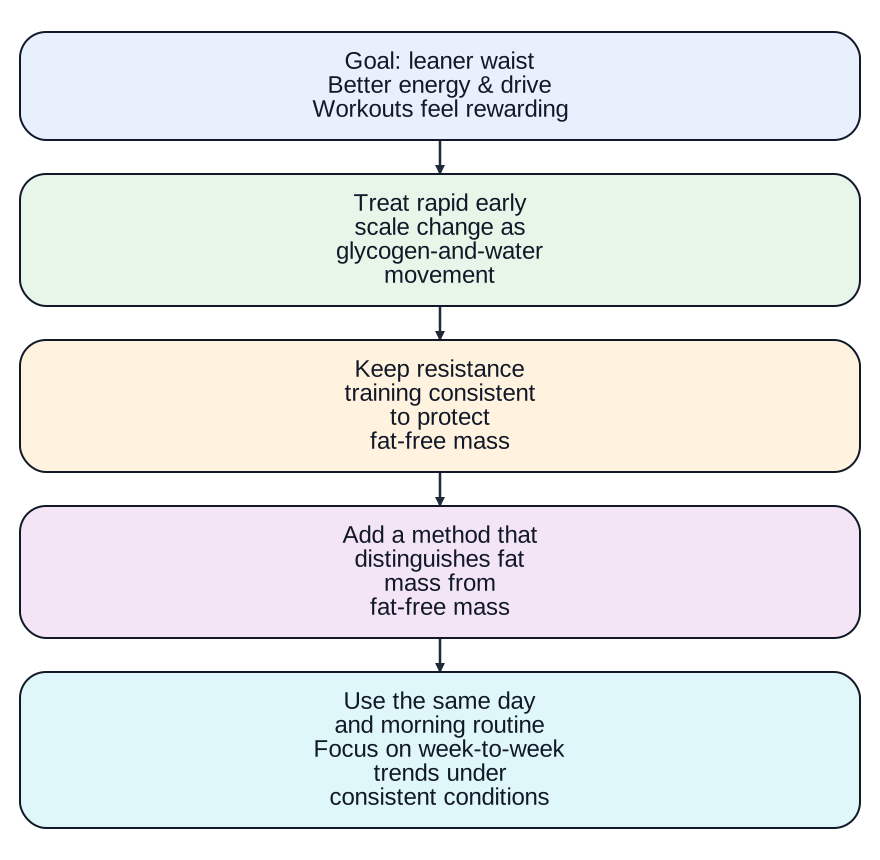
- Tip one improves interpretation: treat rapid early weight change as glycogen-and-water movement, then judge fat loss over longer trends.
- Tip two protects the look and the feel: keep resistance training consistent, since ACSM notes it helps preserve or increase fat-free mass even when total scale loss does not increase.
- A third tip improves feedback: add a method that distinguishes fat mass from fat-free mass, since weight-based metrics cannot do that. Men who track only weight often punish themselves for changes that reflect water and glycogen rather than fat. A simple trend check can replace the daily emotional swing. Your plan should protect the outcomes you care about, not just the number you see on one morning.
Questions? We are here to help! Call (239) 785-1604.
Common scenarios and what they usually mean
A man drops several pounds in the first week, feels optimistic, then sees the scale slow and assumes he hit a wall. Glycogen and its associated water can explain the fast start, so the slowdown does not prove failure. Another man loses weight and feels weaker, and the research on mixed tissue loss helps explain why that can happen when fat-free mass declines. Resistance training can support fat-free mass even when the scale changes less, so a slower drop can still signal progress. The best next step is usually a steadier plan and better measurements, not a harsher cut.
Losing Weight but Feeling Worse?
If fat-loss efforts come with low energy, weaker workouts, and poor recovery, review Testosterone Therapy (TRT) in a provider-led performance evaluation.
FAQ
Why you can lose weight fast and still not look leaner?
Fast early drops can reflect shifts in glycogen and its associated water, which can move scale weight quickly. Changes in carbohydrate intake can produce that effect even when fat mass changes slowly. The leaner look usually tracks with fat loss over time, not with a short-term water shift. A longer trend and a composition-aware measure give a clearer answer than a single week.
How much weight loss can come from muscle or other lean tissue?
Dieting research reviews describe weight loss as a mix of fat mass and fat-free mass, not fat alone. One review summarizes a common rule-of-thumb where roughly a quarter of weight loss can be fat-free mass. Lean-mass protection deserves attention when you diet aggressively.
Whether resistance training matters if you only care about fat loss
Resistance training matters since ACSM notes it helps preserve or increase fat-free mass during weight loss. Men often want the athletic look that comes from keeping muscle while fat drops. The scale can move less in that setup, yet body composition can still improve. A slower scale can still mean a better result.
Why BMI or body weight fails to describe body composition
The CDC explains that BMI and related weight-based measures do not distinguish fat from muscle and other tissues. A muscular man can carry more body weight without carrying more fat. A man who loses muscle can also see a better number that does not reflect a better physique or performance.
The simplest way to avoid getting fooled by the scale
Add at least one method that reports fat mass and fat-free mass separately, since scale weight cannot distinguish them. Keep timing and conditions consistent, then focus on the direction across weeks. Glycogen-and-water shifts can explain many short-term swings, so patience protects you from over-correcting. The goal is a result you can sustain, not a number you celebrate for seven days.